Bunting vs. Garden Flags: Which Outdoor Decor Lasts Longer and Looks Better?
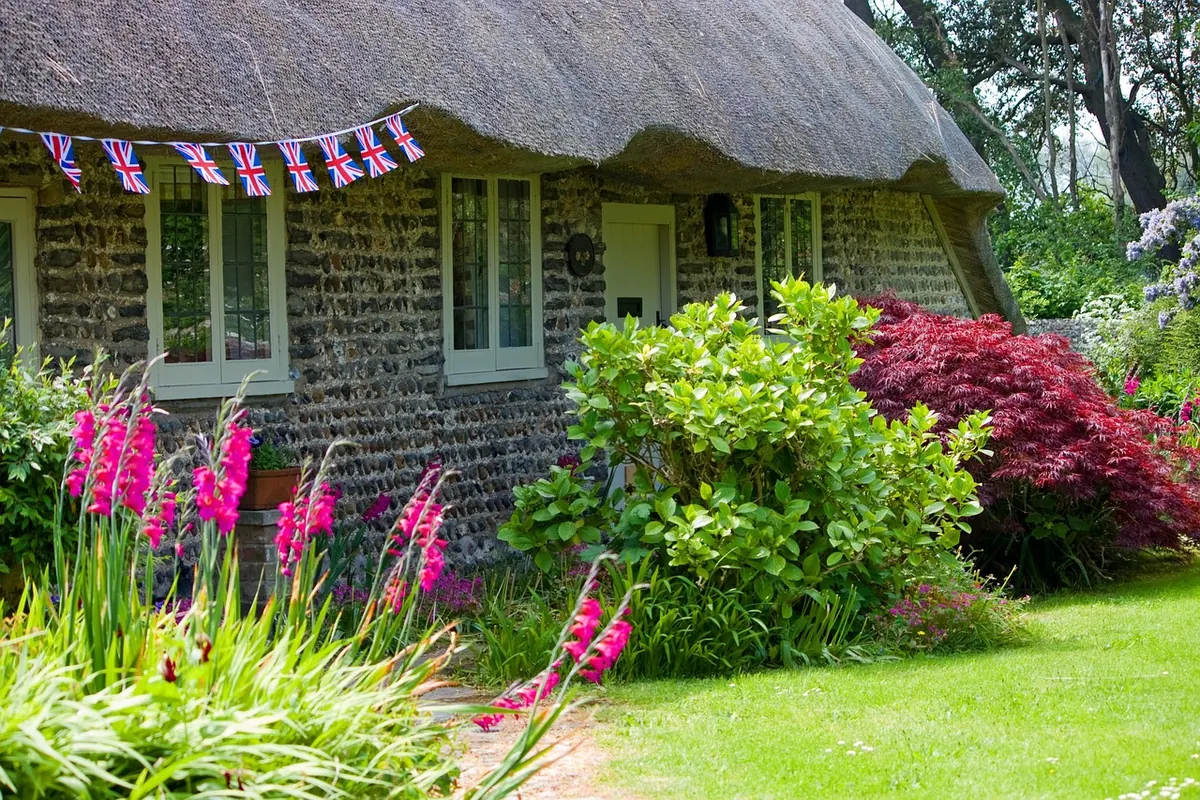
Two strings of triangles stretched along a fence, or one small flag on a stake by the gate. Both say the same thing — someone tends this patch of ground.
They behave nothing alike once the wind picks up. Bunting gives you length and movement. A garden flag gives you one concentrated image. Knowing which suits your fence, your weather, and your calendar saves you from buying the wrong thing twice.
Bunting is a length of fabric pennants — usually triangles, sometimes scalloped — sewn to a tape and hung in a straight line or a soft swag. It comes in short party lengths and in much longer runs, made from cotton, polyester, oilcloth, or nylon.
A garden flag is a single small flag, most commonly around twelve by eighteen inches, printed on one or both sides with a seasonal design and slipped over a sleeve onto a stake or stand. The larger version, roughly twenty-eight by forty inches, is a house flag and hangs from a bracket on a wall or post. Neither is signalling equipment, so there is no rulebook about what belongs where — only what survives and what looks right.
A garden flag wins on installation time. Slide the sleeve over a stake, push the stake into soft ground, done. No ladder, no knots. The catch is the ground itself: in dry summer soil or over a root-heavy bed, a stake starts leaning within a week. Water the spot the night before you plant it, or use a stand with a wider base and set it where the mower will not clip it.
Bunting takes a little planning, but ten minutes of thought saves an afternoon of re-tying.
Keep any run of bunting under roughly six metres between supports. Longer spans need a middle anchor, or the tape carries all the weight and the fabric cups rainwater in every dip.
Sunlight is what kills outdoor fabric, and it starts working in the first week. After fading comes moisture — mildew in damp shade, rot at the seams, and weight. Soaked cotton bunting can nearly double in heft, which is why a line that looked crisp in May looks tired by August.
Material matters more than the prettiest print:
Two details tell you more than any label: the stitching at the sleeve or tape, and whether the hem is double-folded. That is where a flag tears first. A single loose line of stitching across the top of a sleeve will fail in a strong gust; reinforced, box-stitched corners last for seasons.
For either decoration, take it in before a storm and store it dry. A folded, damp flag in a shed box is a mildew farm by spring.
Bunting reads as a line. From twenty metres away you do not see triangles — you see a band of colour and, in any breeze, movement. That is why it suits long boundaries, marquee edges, and market stalls, and why it can look thin and lost on a short fence.
A garden flag reads as an image: one shape, one message, one seasonal character. It has to fight for attention against whatever sits behind it.
A pale flag in front of a dark hedge or a weathered grey fence pops. A navy flag against deep green foliage vanishes. Stand where your visitors or passers-by will stand — the pavement, the driveway — and look at your backdrop before choosing a colour. Whites, yellows, and clear reds hold up best. Mid-tones and busy prints blend into planting and stop reading at a distance.
Check both sides too. Single-sided flags show a muted, mirrored version of the design from behind. That is fine when a flag faces the street, but awkward on a freestanding pole where people approach from two directions. Double-sided printing costs more and is worth it in that spot.
Think of bunting as scenery and a garden flag as a greeting.
Ask three questions. How long will it be outside — a weekend or a season? How much room do you have — a long boundary or one post by the path? And who is looking, from where?
If you answered weekend, long, and passers-by, buy polyester bunting and a couple of spare hooks. If you answered season, one spot, and visitors at the gate, buy a well-stitched garden flag, printed double-sided, in a colour that contrasts with what is behind it.
If you cannot decide, do both and give them separate jobs: bunting for celebrations, one flag for the everyday view. Store each in a dry box, hand-wash flags gently at the end of their season, and inspect the stitching before putting anything away. Restitching a sleeve or replacing a worn tie costs almost nothing next to buying the whole thing again. Two seasons of small care is usually the difference between decor you reuse and decor you re-buy.
Photo: No-longer-here / Pixabay
Previous Post
How to Hang Garden Bunting Without Damaging Trees, Fences, or Walls
Next Post
Beginner's Guide to Buying Weather-Resistant Garden Flags