Wind, Rain, and Sun: How to Protect Outdoor Garden Decor Year-Round
A garden flag that snaps in a June breeze can be limp and bleached by October. A steel lantern that shrugged off three summers can start weeping rust streaks the first winter snow sits on it. Outdoor decor rarely fails all at once. It goes slowly — water pooling in a hollow base, a hook working loose in a gust, fabric folded away while still damp — and most of that is preventable.
Year-round care comes down to three questions: what the piece is made of, how it is held in place, and whether it is dry when you put it away. Answer those consistently and you will get years more out of everything from bunting to birdbaths.
Two planters that look identical can need opposite treatment. The label, the weight, and the sound it makes when you tap it tell you more than the finish does.
Fabric decor — flags, bunting, cushions, shade sails, garden parasols — usually comes in one of three families. Solution-dyed acrylic holds color well and resists mildew because the pigment runs through the fiber rather than sitting on top. Printed polyester is inexpensive and bright, but the print sits on the surface and tends to crack and chalk first. Cotton and canvas feel wonderful and are the most demanding: they soak up water, grow mildew fast, and shrink if dried too hot.
Metal decor — stakes, lanterns, plant stands, obelisks, sculptures — is a similar story. Cast aluminum will not rust, but it pits and corrodes when fertilizer or road salt sits on it. Wrought iron and steel rust as soon as bare metal is exposed, which is why a chipped powder coat matters more than it looks. Paint and powder coating are shells, not treatments. Every chip is a doorway.
Sun and wind do different kinds of damage. Ultraviolet light fades dye and weakens fibers; wind whips fabric against poles, branches, and railings until the edges fray. A wet flag in a strong gust can sand itself apart in a single storm, so the single most useful habit is simply taking fabric down before weather arrives rather than after.
Moisture is the other enemy. Mildew can take hold on a damp folded cushion or in the sagging pocket of a canopy within a day or two. Keep tension even on shade sails and parasols so water cannot collect in a low spot, and let everything air-dry completely before it goes anywhere near a storage bin.
Some damage is worth repairing and some is not. Mildew that lifts with a mild soap solution is fine. Fabric that tears like paper when you tug the hem has sun rot, and no amount of stitching will bring it back. Replace those pieces rather than patching them endlessly.
Water is the engine of most metal damage, and hollow objects are where it does the most harm. Birdbaths, lanterns, and tall planters collect water in their bases; when that water freezes and expands, it can crack seams and split castings. Tip them out after rain, or drill a discreet drainage hole if the piece allows it.
Catch rust early. A small bloom of orange can be sanded back to bare metal, spot-primed, and repainted in an afternoon. Leave it a season and it will pit the metal underneath, which is much harder to hide.
Three habits keep metal in shape:
For patina metals like bronze or aged copper, a thin coat of paste wax slows further oxidation without stripping the finish. Skip wax on anything painted; it can dull the sheen unevenly.
Wind destroys more garden decor than sun, frost, and rain combined, and it almost always wins by moving something rather than breaking it outright. A statue that topples onto stone, a shepherd's hook that pulls out of soft ground, a planter that slides off a wall — these are anchoring failures, not product failures.
A basic anchoring kit for a typical garden:
Push stakes in at a slight angle away from the plant or post, not straight down, and check everything after the first big storm of the season. If you are hanging anything heavy above a walkway or seating area, have the fixing point checked by someone qualified rather than trusting an old bracket.
Most decor is ruined by over-cleaning, not under-cleaning. Abrasive pads, bleach, and pressure washers strip finishes that took years to settle in.
Bird droppings need soaking, not scraping. Lay a wet cloth over the spot for a few minutes, then wipe. If you are cleaning near planting beds, move the piece onto paving or lay down plastic first so runoff does not soak into the soil.
Dry is the whole game. A sealed plastic tote feels safe, but any moisture trapped inside has nowhere to go, and that is how mildew and rust bloom over winter. Breathable containers — cotton pillowcases, canvas bags, cardboard boxes — let trapped humidity escape.
Store fabric rolled or folded along wide curves rather than sharp creases, and never stack heavy items on top of it. Wrap metal pieces in old cotton sheets rather than plastic sheeting. Choose a cool, dark spot with steady humidity: a dry garage, shed, or closet works well; a damp basement does not.
Before anything goes away, check for insects and mouse nests, especially in natural fabrics and straw-filled items. Label each bag or box so spring setup is quick, and coil string lights loosely around a cardboard form rather than knotting them.
Spring is for inspection: check anchors, touch up chips, wash off winter grime. Summer is for light maintenance — a monthly rinse keeps fabric and metal cleaner than any deep scrub. Fall is the big one: clean, dry, and store everything you will not use through winter. Winter is for quick checks after storms, tightening what stays out and clearing snow from hollow bases before it melts and refreezes.
Four short sessions a year will do more for your garden decor than any product on a shelf. And if a piece is heavy, mounted high, or wired for outdoor lighting, it is worth bringing in someone qualified for the installation rather than improvising.
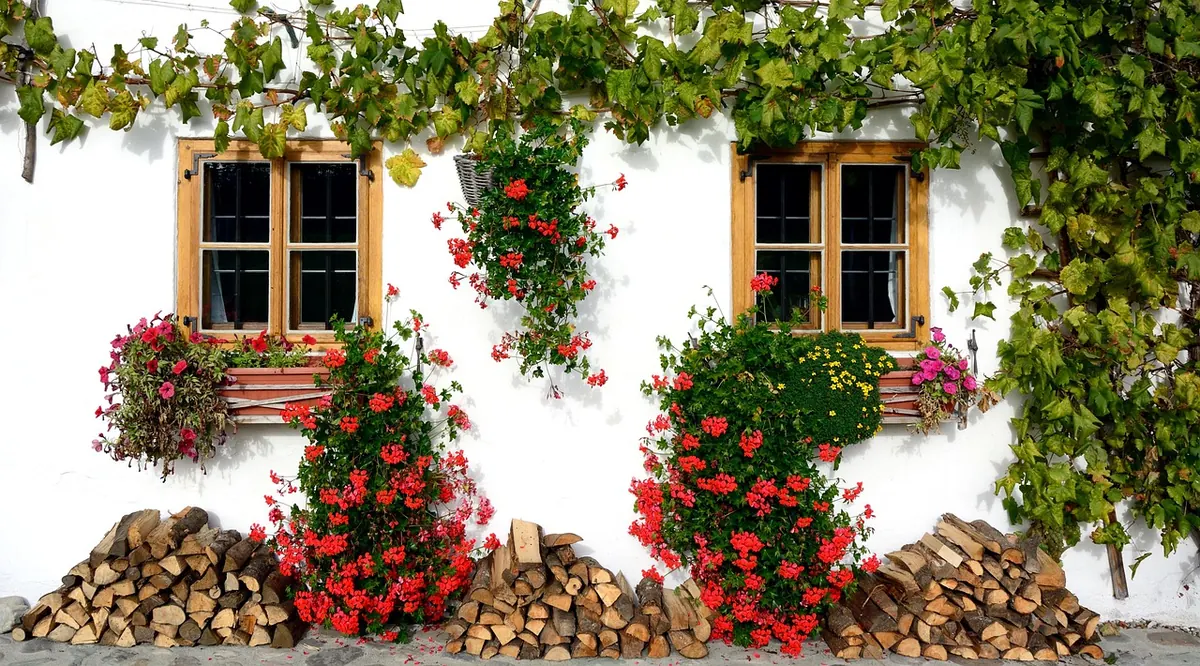
Photo: Pezibear / Pixabay
Previous Post
How to Style a Small Balcony with Bunting and Garden Flags
Next Post
Spring Garden Party Decorating Plan: Bunting, Flags, and Table Settings