Seasonal Garden Flag Calendar: What to Display Month by Month
The first warm Saturday in March, the snowman flag by the front walk starts to look less charming than tired. The daffodils are up, the robins are back, and the flag is still telling last season's story. A simple rotation fixes that, and it takes less time than watering a hanging basket.
Garden flags are one of the least expensive ways to change how a yard feels from the sidewalk. They are also easy to neglect. Most people buy four or five in a burst of enthusiasm, hang one, and leave it up until the fabric fades to a pale ghost of itself. The trick isn't buying more flags. It's knowing when each one goes up, when it comes down, and what replaces it.
For every month, choose two flags: one tied to a holiday or occasion, and one that works for the whole season. Holiday flags go up about ten days before the date and come down within a few days after. The seasonal flag covers the rest of the month. That single habit prevents the two most common problems: a Christmas flag still hanging in February, and a front bed that looks like a clearance rack because six flags went up at once.
If you're building a collection from scratch, sort your options into a few broad categories and make sure you have at least one of each.
Two flags is the sweet spot for most homes: one by the front door, one near the walk or mailbox. Three can work on a long facade if they're spaced far apart. Beyond that, the eye stops reading them as a welcome and starts reading them as clutter. Match the flag size to the pole, too. A small garden flag on a tall house pole looks lost; a large house flag on a short stake drags in the mulch after rain.
December is the easy month. A wreath, a cardinal, a snowman, or something red and green goes up in the first days of the month and carries through the holidays. The hard part is January, which catches people off guard. The holiday flag comes down and nothing goes up, so the pole sits empty for two months.
Plan a winter flag that isn't tied to a holiday: bare branches, evergreens, berries, a single cardinal, a quiet snow scene. Swap it in on December 26 or January 1 and leave it through February. February's holiday flag, if you use one, is short and sweet, and then it's back to the winter design until the thaw.
A snowman flag in a climate that never sees snow reads as an oversight rather than a joke. If your winters are mild, reach for camellias, citrus, cedar, or a simple "welcome" in a warm neutral. If your winters are brutal, remember that stiff fabric in freezing temperatures can crack along the seams, so bring flags in during ice storms and high wind.
March opens with shamrocks and green, then shifts to early spring: daffodils, rain boots, umbrellas, a first hint of pastel. Wind is the real villain this month. Check that your pole's clip or sleeve still holds, and consider a swivel arm so the flag doesn't wrap around the pole and shred itself.
April belongs to rabbits, tulips, and garden tools. If you grow vegetables, the last two weeks of April are a good time for a "seed to harvest" flag, because that's when you're actually out there planting and the flag reinforces the theme. May brings flowers, hummingbirds, and the first real flush of color. It's the month when the garden does the talking and the flag only needs to stay out of the way.
A flag is a two-minute garden task with a payoff you can see from the driveway. That's rare enough to be worth doing properly.
June is graduation, weddings, and the first rose. It's also the month when a "welcome, summer" flag earns its keep, since the garden is lush but the calendar is empty of obvious holidays.
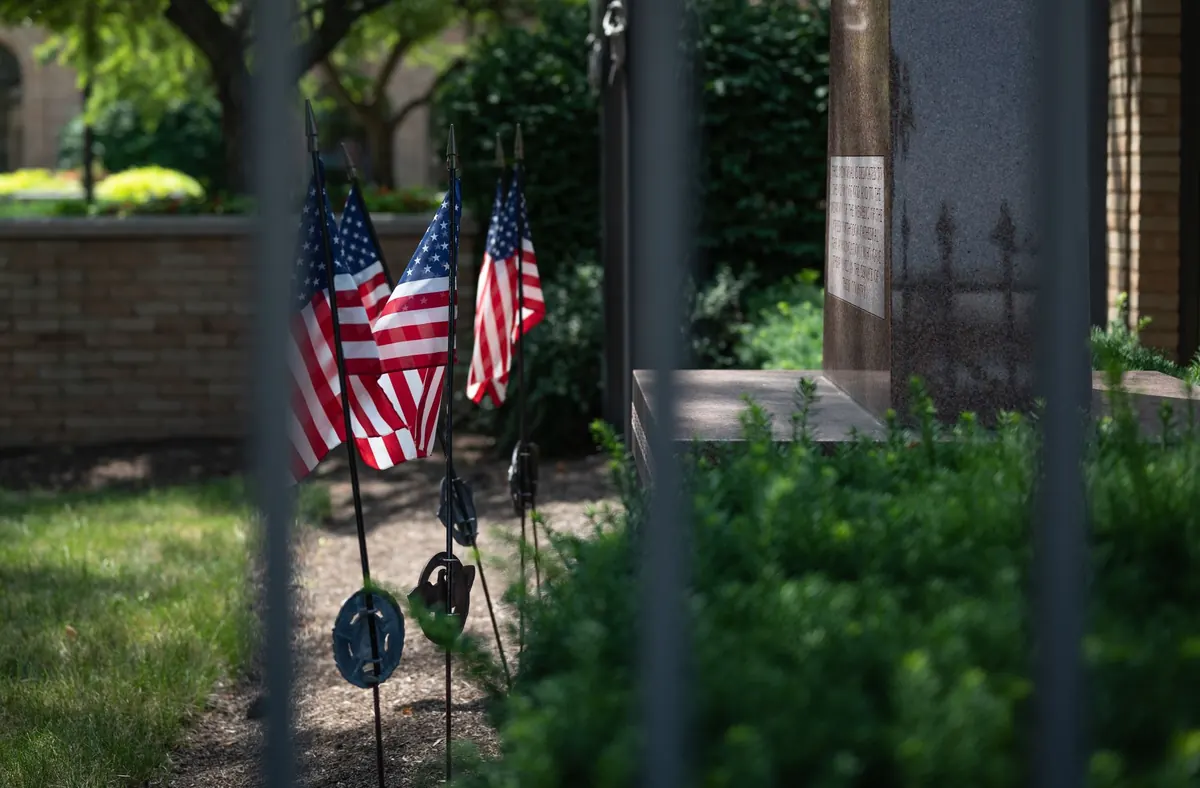
July has one dominant flag, and timing matters. Put the red, white, and blue out in the last week of June so it's up before the neighborhood party, and leave it through the first weekend of July. Then switch to pure summer: sunflowers, lemonade, fireflies, beach stripes. August is the dog days. Cool colors read better than another blast of orange, and by mid-month a back-to-school or early harvest flag feels right. If you grow tomatoes, a small flag marking "first tomato day" is a genuinely fun tradition.
September starts with apples, school buses, and harvest gold, then slides into fall color as the mums arrive. Turn to warm oranges, rust, and deep red by the third week.
October is Halloween: pumpkins, bats, black cats, a little mischief. Here's the practical move. Choose a pumpkin or harvest flag that doesn't read as strictly Halloween, put it up in early October, and leave it through Thanksgiving. You get one long, coherent season instead of a scramble on November 1.
November finishes with gratitude and, in the last week, the first winter design. If you decorate for the winter holidays the day after Thanksgiving, do it then. If you wait until December, that's fine too — just don't leave a jack-o'-lantern out long enough to become the neighborhood joke.
Flags last considerably longer when the rotation includes a wash. A simple routine handles it.
Fading is normal, especially on the south side. Rotate which face points toward the sun when you can, or accept it and move that flag to a shadier pole next year.
You don't need a flag for every occasion, and a bare pole for a week is not a failure. Pick three or four anchor dates you never miss — the holiday you host, the first frost, the first tomato, the first day of spring — and note a "swap flag" reminder on your calendar a few days before each one. Store the flags in the order you'll use them so the next one is always on top of the box.
That's the whole system: two flags a month, a short holiday window, and a seasonal design holding the rest together. It keeps the front of the house in step with the garden behind it, which is really the point.
Photo: Chris F / Pexels
Previous Post
10 Common Garden Flag Mistakes That Cause Fading and Tearing
Next Post
How to Make No-Sew Bunting from Old Fabric Scraps